Buy pudkarpatskarus.eu ?
We are moving the project
pudkarpatskarus.eu .
Are you interested in purchasing the domain
pudkarpatskarus.eu ?
domain@kv-gmbh.de · 0541-91531010
Buy pudkarpatskarus.eu ?
Is estimating guessing mathematics?
Estimating is not the same as guessing in mathematics. Estimating involves using mathematical principles and strategies to make an educated guess about a quantity or value. It requires using knowledge of numbers, operations, and relationships to come up with a reasonable approximation. Guessing, on the other hand, typically involves making a random or uninformed choice without any logical reasoning or mathematical basis. **
'Why am I bad at estimating?'
Estimating can be challenging because it requires a combination of skills such as spatial reasoning, numerical fluency, and the ability to make quick judgments. Factors such as lack of practice, limited exposure to estimating tasks, and cognitive biases can also contribute to difficulties in estimating accurately. Additionally, individual differences in cognitive abilities and experiences can impact one's proficiency in estimating. With practice and awareness of potential biases, it is possible to improve estimating skills over time. **


Similar search terms for Estimating
Top-Angebote
Products related to Estimating:
-
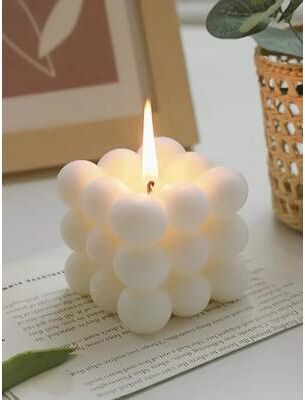
On Spot Shop Handmade Creative Ball Shaped Soy Wax Magic Cube Aromatherapy Candle, Luxury Wedding Favor Gift & Unique Decorative Handmade Creative Ball Shaped Soy Wax Magic Cube Aromatherapy Candle, Luxury Wedding Favor Gift & Unique DecorativeElevate Any Space with a Creative Touch Add instant charm and sophistication to your home or event with the Creative BallShaped Soy Wax Magic Cube Aromatherapy Candle. Designed with artistic flair, this candle doubles as both a soothing aromatherapy...21,97 $*Shipping: 0,00 $Secure redirect to the provider
-
Inspire Essentials Artisan Resin Candle Holder Decorative Home Accent Artisan Resin Candle Holder Decorative Home AccentCreate a warm, inviting atmosphere with this beautifully crafted resin candle holder designed to elevate any space. Whether styled on a dining table, bookshelf, or garden nook, this elegant decorative candle holder adds charm and character in...42,48 $*Shipping: 0,00 $Secure redirect to the provider



-
'How good are you at estimating?'
As an AI, I am designed to be very good at estimating and making accurate predictions based on the data and information available to me. My algorithms are constantly being updated and improved to enhance my estimation capabilities. I can quickly analyze large amounts of data and make informed estimations with a high degree of accuracy. However, it's important to note that my estimations are based on the information provided to me, and there may be limitations to my estimations in certain situations. **
-
What methods are there for estimating distances?
There are several methods for estimating distances, including using landmarks or familiar objects as reference points, using maps or GPS devices to measure distances, and using pacing or counting steps to estimate distances. Additionally, technologies such as laser rangefinders or satellite imagery can also be used to accurately measure distances. Ultimately, the method chosen will depend on the level of accuracy required and the resources available. **
-
What methods are there for estimating distance?
There are several methods for estimating distance, including using landmarks and known distances to gauge the distance to an unknown object, using GPS technology to calculate distance based on satellite signals, and using rangefinders or laser distance measuring devices to directly measure the distance to an object. Additionally, estimation of distance can also be done using visual cues such as the size of an object in relation to its known dimensions, or by using sound to estimate the distance to an object based on the time it takes for the sound to travel. **
-
What is the difference between estimating and appreciating?
Estimating involves making a calculated guess or prediction about the value, size, or extent of something based on available information or data. It is a quantitative assessment that aims to provide a numerical value or range. On the other hand, appreciating involves recognizing and valuing the worth, significance, or importance of something. It is a qualitative assessment that focuses on understanding and acknowledging the positive qualities or attributes of a person, object, or situation. In summary, estimating is about quantifying while appreciating is about valuing. **


What is the difference between rounding and estimating?
Rounding involves changing a number to a nearby value that is easier to work with, usually to a certain place value such as the nearest whole number or nearest tenth. Estimating, on the other hand, involves making an educated guess about the value of a number based on its context and the information available. Rounding is a specific mathematical operation that results in a new value, while estimating is a broader concept that involves making approximations based on reasoning and judgment. **
How does the maximum likelihood method work for estimating parameters?
The maximum likelihood method works by finding the set of parameter values that maximize the likelihood function, which measures the probability of observing the given data under a specific statistical model. This method assumes that the observed data is the most likely outcome given the model and aims to find the parameter values that make the observed data most probable. The process involves calculating the likelihood function for different parameter values and selecting the values that result in the highest likelihood. This method is widely used in statistical inference and estimation for various types of models, including linear regression, logistic regression, and many others. **
Top-Angebote
Products related to Estimating:
-
Sagebrook Home Clay Handmade Decorative Vase Textured and Sculptural Artisan DesignInfuse your home with rustic elegance using this handcrafted clay and pottery vase set, perfect for adding character to your living room, bedroom, office, or any favorite nook in your home.150,49 $*Shipping: 0,00 $Secure redirect to the provider
-
On Spot Shop Handmade Creative Ball Shaped Soy Wax Magic Cube Aromatherapy Candle, Luxury Wedding Favor Gift & Unique Decorative Handmade Creative Ball Shaped Soy Wax Magic Cube Aromatherapy Candle, Luxury Wedding Favor Gift & Unique DecorativeElevate Any Space with a Creative Touch Add instant charm and sophistication to your home or event with the Creative BallShaped Soy Wax Magic Cube Aromatherapy Candle. Designed with artistic flair, this candle doubles as both a soothing aromatherapy...21,97 $*Shipping: 0,00 $Secure redirect to the provider
-
Inspire Essentials Artisan Resin Candle Holder Decorative Home Accent Artisan Resin Candle Holder Decorative Home AccentCreate a warm, inviting atmosphere with this beautifully crafted resin candle holder designed to elevate any space. Whether styled on a dining table, bookshelf, or garden nook, this elegant decorative candle holder adds charm and character in...42,48 $*Shipping: 0,00 $Secure redirect to the provider
-
Is estimating guessing mathematics?
Estimating is not the same as guessing in mathematics. Estimating involves using mathematical principles and strategies to make an educated guess about a quantity or value. It requires using knowledge of numbers, operations, and relationships to come up with a reasonable approximation. Guessing, on the other hand, typically involves making a random or uninformed choice without any logical reasoning or mathematical basis. **
-
'Why am I bad at estimating?'
Estimating can be challenging because it requires a combination of skills such as spatial reasoning, numerical fluency, and the ability to make quick judgments. Factors such as lack of practice, limited exposure to estimating tasks, and cognitive biases can also contribute to difficulties in estimating accurately. Additionally, individual differences in cognitive abilities and experiences can impact one's proficiency in estimating. With practice and awareness of potential biases, it is possible to improve estimating skills over time. **
-
'How good are you at estimating?'
As an AI, I am designed to be very good at estimating and making accurate predictions based on the data and information available to me. My algorithms are constantly being updated and improved to enhance my estimation capabilities. I can quickly analyze large amounts of data and make informed estimations with a high degree of accuracy. However, it's important to note that my estimations are based on the information provided to me, and there may be limitations to my estimations in certain situations. **
-
What methods are there for estimating distances?
There are several methods for estimating distances, including using landmarks or familiar objects as reference points, using maps or GPS devices to measure distances, and using pacing or counting steps to estimate distances. Additionally, technologies such as laser rangefinders or satellite imagery can also be used to accurately measure distances. Ultimately, the method chosen will depend on the level of accuracy required and the resources available. **
Similar search terms for Estimating
-
Unique Leaves Pattern Bathroom Hand Towels Soft Absorbent DecorativeThis hand towel has excellent water absorption performance, dries quickly and keeps soft and comfortable, providing you with the ultimate cleaning experience. It is suitable for bathroom, hotel, spa, kitchen, gym and other places.27,99 $*Shipping: 0,00 $Secure redirect to the provider
-
What methods are there for estimating distance?
There are several methods for estimating distance, including using landmarks and known distances to gauge the distance to an unknown object, using GPS technology to calculate distance based on satellite signals, and using rangefinders or laser distance measuring devices to directly measure the distance to an object. Additionally, estimation of distance can also be done using visual cues such as the size of an object in relation to its known dimensions, or by using sound to estimate the distance to an object based on the time it takes for the sound to travel. **
-
What is the difference between estimating and appreciating?
Estimating involves making a calculated guess or prediction about the value, size, or extent of something based on available information or data. It is a quantitative assessment that aims to provide a numerical value or range. On the other hand, appreciating involves recognizing and valuing the worth, significance, or importance of something. It is a qualitative assessment that focuses on understanding and acknowledging the positive qualities or attributes of a person, object, or situation. In summary, estimating is about quantifying while appreciating is about valuing. **
-
What is the difference between rounding and estimating?
Rounding involves changing a number to a nearby value that is easier to work with, usually to a certain place value such as the nearest whole number or nearest tenth. Estimating, on the other hand, involves making an educated guess about the value of a number based on its context and the information available. Rounding is a specific mathematical operation that results in a new value, while estimating is a broader concept that involves making approximations based on reasoning and judgment. **
-
How does the maximum likelihood method work for estimating parameters?
The maximum likelihood method works by finding the set of parameter values that maximize the likelihood function, which measures the probability of observing the given data under a specific statistical model. This method assumes that the observed data is the most likely outcome given the model and aims to find the parameter values that make the observed data most probable. The process involves calculating the likelihood function for different parameter values and selecting the values that result in the highest likelihood. This method is widely used in statistical inference and estimation for various types of models, including linear regression, logistic regression, and many others. **
* All prices are inclusive of VAT and, if applicable, plus shipping costs. The offer information is based on the details provided by the respective shop and is updated through automated processes. Real-time updates do not occur, so deviations can occur in individual cases. ** Note: Parts of this content were created by AI.